Building information modeling definition
Hem / Teknik & Digitalt / Building information modeling definition
Facility teams can analyze asset performance, predict failures before they occur, and schedule service at the best possible time, keeping downtime and disruptions to a minimum.
3. This is called Open BIM, meaning that another layer of protection is added against clashes, adding value to the project at every stage. With this calculator, you will see how to save on operational costs and time.
When integrated with FM systems like Facilio, BIM reduces lifecycle costs through proactive maintenance, asset optimization, and improved energy performance.
The future: BIM meets Connected FM
Modern buildings demand connected, data-driven management.
The Netherlands and other countries have similar requirements.
By embedding regulatory requirements into BIM models, authorities can review submissions faster and more accurately. It creates a feedback loop where operational insights inform future planning and drive continuous improvement.
In essence, BIM empowers facility teams to move from reactive maintenance to proactive performance management.
Owners receive LOD 500 as-built models with facility management data in COBie format for operations. This insight supports better decisions around workspace design, energy zones, and occupant comfort, helping optimize every square foot for efficiency.
4. Whether you need full-service BIM coordination, model conversion from 2D, or trained BIM personnel for specific projects, outsourcing provides BIM capabilities without the overhead of permanent staff and software investments.
As BIM technology continues to evolve—with AI, cloud platforms, and web-based tools—the industry's digital transformation will only accelerate.
Next came CAD (Computer Aided Design), which helped drafters see the benefit of plans in a digital environment. Instead, LOD increases as the project progresses:
For Architects (LOD 100-300): Early design uses simple massing models (LOD 100-200) to study form and spatial relationships. It's essential for complex infrastructure like data centers, hospitals, and civil projects.
Level of Development (LOD) defines model detail at each stage.
This allows the model to remain consistent and coordinated throughout the entire process so that structural engineers, architects, MEP engineers, designers, project managers, and contractors can work in a more collaborative environment.
Example of a BIM object: Optibal W6 ball valve with Actuator - downloaded from the manufacturer and used by plumbing engineers in their BIM models.
The “I” in BIM
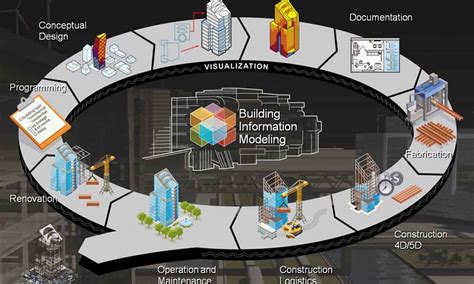
BIM, as a whole, refers to the process of all parties involved in the construction and lifecycle management of built assets, working collaboratively and sharing data.
This intelligence enables specific applications across the project lifecycle:
- 4D BIM links the model to construction schedules, enabling contractors to visualize and optimize the build sequence
- 5D BIM connects quantities to cost databases, allowing real-time cost tracking as the design evolves
- 6D BIM embeds facility management data, transforming the as-built model into an operational asset for building owners
In essence, BIM is a database of building information wrapped in a 3D interface—enabling better decisions, tighter coordination, and improved outcomes throughout the entire project lifecycle.
Architects use BIM to rapidly prototype designs, coordinate across disciplines, and meet regulatory requirements:
Design Coordination: Architectural models sync with structural models to prevent conflicts.
This helps identify:
- Sequencing conflicts (activities that can't happen simultaneously)
- Site logistics issues (crane positioning, material storage)
- Critical path dependencies
- Construction milestones and phasing
For complex projects like high-rise buildings or infrastructure, 4D visualization helps general contractors communicate the construction plan to stakeholders and optimize the build sequence.
BIM models contain quantity data that can be automatically extracted for cost estimation.
Facility managers use this data for maintenance planning, space management, and asset tracking, improving decision-making long after construction is complete.
3.
Facility and operations directors
- Visualize all assets in 3D and access live performance data.
- Trigger maintenance actions directly from the model.
- Improve uptime and streamline response times across teams.
Why it matters: Move from reactive maintenance to predictive operations with full asset context.
3.
When multiple disciplines—structural, architectural, mechanical, electrical, plumbing—work on the same project, conflicts are inevitable.
What is BIM (Building Information Modeling)
BIM model of Randselva Bridge, the world's longest bridge built with BIM models only - no drawings.
What Is BIM?
BIM is an acronym for Building Information Modeling or Building Information Management.
Designers get immediate feedback on code compliance, reducing the approval cycle from months to weeks.
BIM proves especially valuable in specialized sectors:
- Data Centers: Managing dense MEP coordination, cable routing, and equipment layouts
- Hospitals: Coordinating complex medical gas systems, HVAC for infection control, and critical equipment
- Civil Infrastructure: Using IFC4x3 (the latest OpenBIM standard) for bridges, tunnels, roads, and rail projects
Despite its benefits, BIM adoption faces several obstacles:
Not all project participants are equally capable with BIM.
Large consultancies and contractors may have dedicated BIM departments, while smaller firms struggle with the investment and learning curve. The future is moving to the browser:
- Free IFC viewers: Web-based viewers like Bimeco's platform allow stakeholders to review models without software licenses
- Cloud collaboration: Real-time model access from any device, anywhere
- Accessibility: Lower barriers to entry for smaller firms and project partners
Web-based BIM democratizes access, enabling broader participation in the BIM workflow without expensive desktop software and workstations.
BIM represents the future of construction—a shift from paper-based, siloed workflows to integrated, data-driven collaboration.
Real estate owners and portfolio managers
- Gain a unified, portfolio-wide view of building performance.
- Compare asset efficiency across sites to guide capital planning.
- Reduce operating costs through data-driven insights and centralized monitoring.
Why it matters: Turn BIM data into a continuous performance record that informs smarter investment decisions.
2.
Watch episode one!
Building Information Modeling 101: How It Works, and Key Benefits
What is Building Information Modeling (BIM)?
Building Information Modeling (BIM) is a smart, model-based process that helps everyone involved in a building project — from architects and engineers to contractors and facility managers — work together using one shared digital model.
Its benefits are clear: better coordination, reduced rework, improved cost control, and enhanced facility management.
Yet challenges remain. BIM service providers bridge this gap by converting 2D to BIM.
In Singapore, BIM data captured in IFC+SG enables regulatory agencies to automatically check building code compliance—accessibility, fire safety, structural requirements—through CORENET X submissions.
Clear data standards and regular synchronization between BIM and CAFM systems help overcome these issues.
10. Asset-heavy industries and infrastructure operators- Monitor critical systems (like HVAC, MEP, and safety equipment) in real time.
- Anticipate failures through predictive analytics.
- Maintain compliance and operational reliability across large, complex sites.
Why it matters: Use BIM-driven FM data to boost uptime, reliability, and compliance across complex infrastructures.
5.
What is BIM (Building Information Modeling)
BIM model of Randselva Bridge, the world's longest bridge built with BIM models only - no drawings.
What Is BIM?
BIM is an acronym for Building Information Modeling or Building Information Management.
Designers get immediate feedback on code compliance, reducing the approval cycle from months to weeks.
BIM proves especially valuable in specialized sectors:
- Data Centers: Managing dense MEP coordination, cable routing, and equipment layouts
- Hospitals: Coordinating complex medical gas systems, HVAC for infection control, and critical equipment
- Civil Infrastructure: Using IFC4x3 (the latest OpenBIM standard) for bridges, tunnels, roads, and rail projects
Despite its benefits, BIM adoption faces several obstacles:
Not all project participants are equally capable with BIM.
Large consultancies and contractors may have dedicated BIM departments, while smaller firms struggle with the investment and learning curve. The future is moving to the browser:
- Free IFC viewers: Web-based viewers like Bimeco's platform allow stakeholders to review models without software licenses
- Cloud collaboration: Real-time model access from any device, anywhere
- Accessibility: Lower barriers to entry for smaller firms and project partners
Web-based BIM democratizes access, enabling broader participation in the BIM workflow without expensive desktop software and workstations.
BIM represents the future of construction—a shift from paper-based, siloed workflows to integrated, data-driven collaboration.
Real estate owners and portfolio managers
- Gain a unified, portfolio-wide view of building performance.
- Compare asset efficiency across sites to guide capital planning.
- Reduce operating costs through data-driven insights and centralized monitoring.
Why it matters: Turn BIM data into a continuous performance record that informs smarter investment decisions.
2. Watch episode one!
Building Information Modeling 101: How It Works, and Key Benefits
What is Building Information Modeling (BIM)?
Building Information Modeling (BIM) is a smart, model-based process that helps everyone involved in a building project — from architects and engineers to contractors and facility managers — work together using one shared digital model.
Its benefits are clear: better coordination, reduced rework, improved cost control, and enhanced facility management.
Yet challenges remain. BIM service providers bridge this gap by converting 2D to BIM.
In Singapore, BIM data captured in IFC+SG enables regulatory agencies to automatically check building code compliance—accessibility, fire safety, structural requirements—through CORENET X submissions.
Clear data standards and regular synchronization between BIM and CAFM systems help overcome these issues.
10. Asset-heavy industries and infrastructure operators- Monitor critical systems (like HVAC, MEP, and safety equipment) in real time.
- Anticipate failures through predictive analytics.
- Maintain compliance and operational reliability across large, complex sites.
Why it matters: Use BIM-driven FM data to boost uptime, reliability, and compliance across complex infrastructures.